The Triple Steal

By Michael LeCompte

Baseball is a beautiful game, at once both simple and intricate. It is quite simply about throwing, hitting, and catching a ball. However, the scenarios stemming from these three basic elements of play are seemingly infinite.

Each baseball game still offers fans the possibility of seeing something they have never witnessed on the diamond before and the pace of the game lends itself to thinking about whether or not a certain play or situation has ever arisen before.

Although its history stretches back well over a hundred years some baseball feats remain rare. The triple play, perfect game, hitting for the cycle, and inside the park home run, for instance. What about the plays you have never heard of, let alone seen, though? Are they really even possible?

What about the triple steal?

The triple steal does in fact exist, but for one to occur the bases obviously must be loaded and all three runners (first, second, and third), must be officially credited with a stolen base.

According to baseball rules stolen bases are credited whenever “a runner advances one base unaided by a base hit, a putout, a force out, a fielder’s choice, a passed ball, a wild pitch, or a balk.”

In other words, everything must go perfectly for the three baserunners for the triple steal to occur.

The hardest part of the triple steal is the swiping of home plate by the lead runner. Part of what makes the triple steal so rare is that stealing home is so seldom attempted in today’s game.

In a bygone era Ty Cobb stole home 53 times in his career (6 times as part of a triple steal).

The latest triple steal in Major League Baseball occurred in 2008 when Cleveland pulled it off against the Chicago White Sox.

The triple steal, a rare, but not impossible feat of base running prowess and gutsy managing. One of the many beautifully intricate possibilities of any given baseball game that keep us coming out to the ball park.

Who Is Dr. Jen Welter?

By Michael LeCompte

In July the Arizona Cardinals made headlines with the hiring of Jen Welter as the first female coach in NFL history and on Sunday her groundbreaking summer continued at University of Phoenix Stadium where the NFL’s first female referee, Sarah Thomas, was officiating. We all read the headlines and heard the interviews, but who, exactly is Jen Welter?

Jen Welter played collegiate rugby at Boston College, where she earned a Master’s Degree in Sport Psychology. After earning her PhD in Psychology she played and coached professional football, worked as a personal trainer and nutritionist, and has been a motivational speaker.

Welter played linebacker for the Dallas Diamonds of the Women’s Football Alliance, winning multiple championships, before moving into the men’s game.

On January 24, 2014 the 5-foot-2 130 pound Welter made her debut at running back for the Texas Revolution of the IFL, becoming the first woman to play football in a men’s league at a position other than kicker. (She rushed 3 times for -1 yards in her only action at running back).

Moving from the field to the sideline Welter then served as the Revolution’s linebacker’s coach.

On July 27 Arizona hired her as a training camp/preseason intern inside linebackers coach.

“I’m here as a football coach,” Welter, 37, said upon her hire.

Football insiders report that Welter has a great “football mind” and that it was only a matter of time until she was given a chance to coach and Arizona head coach Bruce Arians has stated that her hiring is no publicity stunt.

However, there are a few potential problems with Welter’s hiring.

First, if Welter was brought to Arizona as a coach and not a stunt, then why the preseason intern tag? Did management want to grab some press, but retain an easy way to separate themselves from their new hire and any possible distractions during the regular season?

It seems as though if she were really there as a coach that she should be given that opportunity during the season when the games actually matter.

Secondly, her coaching position might get the spotlight, but Welter’s talents might actually be better utilized in an team official capacity. Her Doctorate in Psychology, specializing in Sports Psychology, probably allows her a unique perspective and understanding of the physical, mental, and emotional well-being of professional athletes.

As perhaps a team Psychologist, rather than a coach, Welter may be able to motivate players the way no amount of coaching ever could. (More and more teams are employing Psychologists as the mental health of players continues to be an issue).

By becoming the first female coach in the NFL Jen Welter is already a success, but hopefully she does well and earns the right to a full-time coaching job, in Arizona or anywhere else, her hire is good for the game and could open the door for more non-traditional hires, of both men and women.

What’s In A Name?

By Michael LeCompte

What’s in a name?

Pride? Group Identification? History? Shame?

Perhaps all of the above for the Washington Redskins who on July 8th lost their trademark in Federal Court when a judge ruled that the name “might denigrate Native Americans.”

The term Redskins has long been deemed racist and in recent years protests against the team have increased, leading opponents of the name to hail the court ruling as the first step to the eventual forced changing of the name.

Washington is a proud NFL franchise, having played for over 80 seasons and winning 3 Super Bowls (XVII, XXII, and XXVI), yet its name seems to attract the most attention and generate the most controversy.

The team was formed in 1932 as the Boston Braves, but soon changed to the Boston Indians before finally becoming the Redskins and moving to Washington, D.C. Team legend has it that the name Redskins was chosen to honor an early coach of the team who was of Native American descent, but the original owner of the franchise claimed the real reason was to differentiate the football team from the baseball Braves and Indians.

Every season protests of the Redskins occur, are broadcast in the sports news, then largely forgotten as the team progresses through another bad to mediocre season. That could all change now with the recent court ruling against the team. Now that the first legal foothold has been gained protests and demonstrations against the team will only intensify and while the trademark cancelation won’t go into effect until after the team exhausts all of its appeals (a process that could take years) it technically opens the doors for any fan or company to eventually start producing and selling merchandise with the Redskins logo on it, hurting the team and owner Daniel Snyder where it hurts most, not on the field, but in the pocketbook.

Redskin’s owner Daniel Snyder has publicly stated that he will never change the name of his team. Long considered one of the worst executives in the NFL (along with Jerry Jones in Dallas) Snyder is known for making splashy moves that result in more headlines than wins (hiring Steve Spurrier as coach comes to mind among so many other busts) and rest assured he knows exactly what he’s doing in resisting the pressure to change his team’s name.

The NFL is a business and Snyder is certainly a good businessman. In 2013 Forbes valued the Redskins at $1.6 billion, third most valuable in the NFL behind Dallas and New England. Controversy is good for business and keeps his team in the news more than wins ever could. As the pressure increases to change the name Snyder will hold out and die-hard fans will shell out big bucks for Redskins’ merchandise. Then when the pressure from fans, interest groups, the Native American community and the court system become insurmountable he will relent, change the name and make another bundle off all-new merchandise.

If the recent court ruling against the Redskins was indeed the first step towards a name change then here are a few thoughts for Daniel Snyder to consider:

Why not drop the term Redskins, but not adopt a new name? Why not simply be known as Washington or The Washington Football Club? This would make the franchise unique among NFL teams and would sidestep any controversy.

Or, how about becoming the Washington Generals (no one would care that a phony, trick-basketball team already had the name), adopting a simple red, white, and blue color scheme and honoring the Father of Our Country and namesake of the city they play in?

What’s in a name?

For now, for the Washington Redskins…controversy.

All-Star Origins: The First “Game of the Century”

By Michael LeCompte

As Major League Baseball prepares for its 82nd All-Star game to be played in Cincinnati on Tuesday here’s a look back at the first “Game of the Century” and how the mid-summer classic came to be an annual event.

In 1933 the sport of baseball was suffering along with the rest of America. Players salaries were slashed and attendance fell in every stadium as the depression took hold across the country.

Baseball’s first All-Star game was a product of its time, a depression-era publicity stunt, and was the result of one man’s love for sports and penchant for promoting.

Arch Ward (1896-1955) was the sports editor of the Chicago Tribune in 1933 when the idea of a baseball exhibition featuring the game’s best players came to him. Using his connections in the sporting community he worked to make the game a reality, dubbing it the “Game of the Century” and scheduling it to be played in Chicago in July to coincide with the year-long World’s Fair hosted by Chicago.

Baseball enthusiastically agreed to the idea and fans voted for the players on each team with ballots from the national newspapers.

The game was held at Comiskey park with bleacher seats costing 55 cents and box seats $1.65. Thanks to the likes of Babe Ruth and Lou Gehrig the American League won the game 4-2 and a tradition was born when team owners voted shortly after the game to make the All-Star exhibition an annual event.

Arch Ward intended baseball’s “Game of the Century” to be a one-time event, but if he felt any disappointment over the yearly adoption of his creation he channeled it into other promotional activities, founding both the Golden Gloves boxing tournament and the college football All-Star game during his long career in the sports industry.

From its humble, depression-era beginnings baseball’s All-Star game has persisted, the showcasing of the best the game has to offer, the spectacle has endured. On Tuesday night in Cincinnati the simple beauty of America’s national pastime will once again be on full display in the 82nd “Game of the Century.”

The American “Sport” of Competitive Eating

By Michael LeCompte

In our modern, sports-obsessed culture virtually anything can be turned into a competition from athletic events to singing and cooking. If the announcers yell loud enough even lumberjack games or weight-loss contests are made to sound and seem like the Super Bowl. One “sport” that continues to grow is competitive eating and its biggest event is the annual Nathan’s 4th of July hot dog eating contest.

Casual observers might argue that competitive eating is not a real sport, but all the elements of the other major American sports are present in the Nathan’s 4th of July contest.

Nathan Handwerker is the undisputed father of the sport. Born in Poland in 1882 he came to America in 1912 and opened his now-famous hot dog stand on Coney Island in 1916.

The first 4th of July hot dog eating contest was held in 1916 and pitted four immigrants chowing down to determine who was the most patriotic. James Mullen, an Irish construction worker from New Jersey emerged victorious, consuming 13 hot dogs in 12 minutes and a tradition was born.

Like Abner Doubleday inventing baseball, though, the story of an Irish construction worker proclaiming his allegiance to America with his stomach is probably more myth than fact. No written record of Mullens winning a 4th of July hot dog eating contest exist prior to the 1970’s, and in the 1990’a a Nathan’s pitchman admitted to fabricating the story.

Like other major sports competitive eating has benefited from cable TV and ESPN now airs Nathan’s 4th of July contest.

Just like football or baseball players competitive eaters train hard. Stomachs are stretched and throats coaxed for the sport.

Competitive eating also has also seen its share of dynasties and produced a number of superstars, such as Joey Chestnut, Tokeru Kobayashi, and Sonya Thomas.

Joey “Jaws” Chestnut has won 8 Nathan’s 4th of July contests in a row. He is the Tom Brady of competitive eating and brings a similar dedication to his culinary craft, stating that, “this sport isn’t about eating. Its about drive and dedication, and at the end of the day hot dog eating challenges both my body and mind.”

Competitive eating has also had its pioneers, advancing the sport for those who follow. Sonya “The Black Widow” Thomas, a 98 pound Korean-American won the inaugural Nathan’s 4th of July Women’s Hot Dog Eating Contest in 2011 and hasn’t lost one since.

Also, like any respectable sport competitive eating has its own coveted trophy, its own version of the Lombardi trophy that individuals are willing to stretch their stomachs to the limits to attain. The winner of the Nathan’s 4th of July contest receives a bejeweled mustard-yellow Championship belt of “unknown age and value.”

This 4th of July as we celebrate our wonderful way of life the distinctly American “sport” of competitive eating will hold its Super Bowl when contestants battle for gastronomical glory in the Nathan’s Famous 4th of July Hot Dog Eating Contest.

Ping and Percy

By Michael LeCompte

Eating contests have probably been around for as long as food itself and one of the strangest took place in 1919 and pitted a human against an ostrich to see who could eat the most spaghetti.

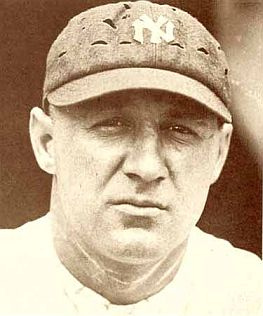
Francesco Stephano Pezzolo (1887-1961) was an Italian-American baseball player from California. He dominated the Pacific Coast League, belting 30 home runs in 1910 for the San Francisco Seals. That many home runs was unheard of in the dead ball era and earned Pezzolo a contract with the White Sox.

ping-bodie

When his baseball career took off Francesco began going by Frank Bodie, for the California town where he grew up and because it sounded less-ethnic. A career .275 hitter in the major leagues, Bodie hit the ball hard and earned the nickname “Ping” supposedly for the sound the ball made when it came off his bat.

Although he changed his name to sound less-ethnic Bodie could never quite subdue his fiery Italian personality, openly clashing with management while with the White Sox. After being traded to Philadelphia he once famously quipped that the only attractions in Philly were “the Liberty Bell and Ping Bodie.”

From 1919-1921 Bodie played for the Yankees and it was during spring training in 1919 that the 5’8” 190 pound outfielder would achieve the status of “World’s Greatest Eater.”

The Jacksonville Chamber of Commerce decided to hold an eating contest pitting an animal against a human to promote tourism on April 3, 1919. The contest was held in a tent without much advertising and with little fanfare to reduce the possibility of protests by animal rights groups.

As a nod to Bodie’s Italian heritage spaghetti was chosen for the contest. Ping the baseball player and Percy the ostrich matched each other through the first three plates of noodles, however, Percy’s sides began to swell visibly after the fourth plate, causing some to leave the spectacle rather than see what they feared would be a grisly conclusion.

The contestants kept eating until the eleventh plate. Ping finished his eleventh plate, but Percy collapsed without finishing his.

According to legend Percy the ostrich never regained consciousness.

After leaving the Yankees in 1921 Bodie bounced around the minors for 7 seasons before retiring to a career as an electrician and bit-actor in Hollywood.

Whether Percy really ate himself to death that day or simply returned heavier to the Jacksonville zoo eating contests have endured as spectacle and now “sport.”

Why Air Jordan Will Always Be Better Than King James

By Michael LeCompte

Throughout the NBA Finals, which the Warriors won 4-2, commentators constantly compared LeBron James to Michael Jordan. These comparisons are nothing new, they’ve been made since James entered the NBA right out of high-school and he’s been touted as the NEXT GREATEST ever since, but the legend comparisons seemed to reach a crescendo during the Finals.

Really, though, there is no comparison to be made. As LeBron showed in falling short in the Finals yet again, he is no Jordan.

The NBA Finals were a compelling matchup and produced the highest TV ratings since Jordan’s last Championship with Chicago, but that is where any and all ties between Jordan and James as basketball players end.

Much was made of LeBron’s Jordan-like performance in the Finals, both in minutes played and points scored and a compelling case could be made that he deserved the MVP award, however, the only statistic that matters concerning LeBron and his legacy is that he lost in the Finals…again.

LeBron was playing in his fifth straight Finals (the previous four with Miami) and sixth overall (Cleveland in ’07). King James has now played in the same number of Finals as Air Jordan, yet he only has two rings to show for it.

Granted LeBron hasn’t always had the supporting cast in Cleveland that Jordan enjoyed in Chicago, but the fact remains that Jordan never lost in the Finals, while LeBron has now lost four times with rings on the line.

Perhaps it is unfair to even compare two players from different eras, but LeBron has been compared to Jordan since the age of 18, so why not highlight his shortcomings?

At 6’6″ and 215 pounds Jordan was the perfect mix of speed, power, and grace on the court. It looked as if he was gliding down the court and floating above it as he did seemingly whatever he wanted with the ball in his hands. Even if one were rooting against Chicago in the 1990’s they couldn’t help but marvel at the athleticism of Air Jordan.

On the biggest of stages, the NBA Finals, Jordan always seemed to be at his best (even when he felt his worst: the flu game in ’98). His competitive nature is legendary. When the Bulls made the Finals he simply refused to lose, elevating his game to otherworldly levels, regardless of the shortcomings of his team or how the game was being called.

That is perhaps the main difference between LeBron and Jordan. LeBron lacks that will to win that Jordan had. With the game on the line it always seemed as if Jordan couldn’t miss, while LeBron missed several clutch shots in these Finals. LeBron also seems to let outside forces affect his game in a way Jordan never would. Sure Jordan might bark at a ref when a call didn’t go his way, but then he would lower his head and take over the game, whereas LeBron whines, shakes his head, throws his arms up in disbelief, then proceeds to miss his next few shots.

Maybe it all happened too fast for LeBron. He entered the league out of high-school and has been told he’s great ever since. Maybe the multi-millions soften the blow of defeat for him and make losing acceptable in a way that it never could be for Jordan.

Jordan was perhaps the most marketable athlete ever, but he earned that privilege in a way LeBron didn’t, resulting in a stronger psyche and a better basketball game.

Jordan conditioned his body and polished his game for four years at the college level, while LeBron opted for the immediate millions of the NBA after high-school. Jordan spent his first six years in the NBA on mediocre Bulls teams and didn’t win the first of his six Championships until the age of 28.

At 30 LeBron he has now played in as many Finals as Jordan, however, with the minutes he continues to pile up, as exhibited in the Finals, it is certainly fair to speculate how many injury-free years he has left.

Standing 6’8″ and weighing 250 pounds LeBron’s game is more about power, overwhelming his opponent with blunt force, rather than the athleticism that Jordan exhibited.

Most agree that Michael Jordan was the greatest basketball player ever. The problem with the NEXT BIG THING (in this case LeBron James), though, is that we’ve already seen the original BIG THING. We’ve already seen the greatest, so while some love and some hate LeBron, most basketball fans outside of Cleveland can simply take him or leave him.

After Cleveland’s game 5 loss in the Finals LeBron said, “I’m not worried, I’m the best basketball player in the world.”

Perhaps the best basketball player in the world would not have to tell people he was the best, though? Jordan certainly never would have said that, he just would have shown it by going out and destroying the competition.

The comparisons between LeBron and Jordan will continue until the end of LeBron’s career when his legacy can be fully evaluated. The only stat that truly matters in discussions of “the greatest,” though, is Championships. Jordan went 6-6 in the Finals, LeBron is 2-4.

That, quite simply, is why Air Jordan will always be better than King James.
Who Is Larry O’Brien?

By Michael LeCompte

We’ve all seen it, usually in the hands of superstar basketball players as they celebrate winning the NBA Finals, the Larry O’Brien trophy, that shiny gold basketball dropping into a net, but who is Larry O’Brien and why does his name grace the championship trophy?

Larry O’Brien (1917-1990) was actually a longtime Democratic Party political strategist. In a political career spanning over twenty years O’Brien advised or served in the Cabinet’s of Presidents and at one point the party seriously considered making him a Presidential candidate.

larry

After earning his law degree O’Brien went to work for the Democratic party and was the national director of John F. Kennedy’s 1960 Presidential campaign.

In November of 1963 O’Brien, organizing Kennedy’s re-election campaign for 1964, accompanied the President on his fateful trip to Dallas.

When Lyndon B. Johnson assumed the Presidency after Kennedy’s death he appointed O’Brien the United States Postmaster General. O’Brien served the Democratic party into the 1970’s and his name was even put forward as a potential Democratic rival to Richard Nixon for President in 1972, although he was never nominated.

The second act of O’Brien’s career took him from the political arena to the sports arena and is how his name came to be on the NBA Championship trophy.

O’Brien served as NBA Commissioner from 1975-1984 and oversaw the merger of the ABA and NBA. He also worked with the player’s union to clean up the NBA’s image, which was suffering from a drug problem, and successfully implemented the leagues first official anti-drug policy.

Under O’Brien the NBA began to flourish. He brokered the leagues first cable deal and made the Finals the televised spectacle that we have come to know and love.

O’Brien left the Commissioner’s office in 1984 and the Championship trophy was re-christened the “Larry O’Brien Trophy” in his honor.

larry-obrien-trophy

The trophy itself stands 2 feet tall and weighs 14.5 pounds. It is made by Tiffany and Company of sterling silver with 24 karat gold overlay.

The Art Of Switch-Hitting

By Michael LeCompte

Switch-hitting, a hitter batting right-handed against a left-handed pitcher or from the left side of the plate against a righty is a tough and rare talent for a baseball player, one with both inherent pros and cons.

In 1950 there were only three players classified as switch-hitters in Major League Baseball. The next season that all changed when Mickey Mantle, perhaps the most proficient and certainly the most well-known switch-hitter joined the Yankees.

Maris’s success from both sides of the plate led to an increase in the number of players who learned to switch hit over the ensuing decades. In the years since Maris the amount of switch-hitters in the game has ebbed and flowed as the merits of the skill have been debated or ignored. As of 2013 only 61 players in the Majors could be classified as switch-hitters, just 8% of players in the game.

Being able to adequately hit from both sides of the plate is an admirable and coveted skill because, theoretically at least, it means the batter does not have to face a slider or other breaking pitches. If a righty is pitching and a switch-hitter bats left-handed or if a lefty is throwing and a switch-hitter bats from the right side, then breaking pitches should come into the barrel of the bat, thus allowing a switch-hitter a better opportunity to make contact.

Another advantage switch-hitting provides is that it potentially nullifies some situational pitching changes. If a manager wants to bring in a specific pitcher to pitch to a certain batter one way, the batter could simply begin his at-bat from the opposite side of the plate, thus forcing the manager/pitcher combo to either pitch to the batter and live with the results or use another pitcher.

After Maris hit .298 and slugged 536 home runs in a Hall of Fame career a generation of Dads in backyards across America tried to teach their kids how to bat from both sides of the plate. Since Maris many notable players have possessed the ability to switch-hit. Pete Rose, Lance Berkman, Chipper Jones, Pablo Sandoval, and Mark Teixera are perhaps the most notable.

While the ability to switch-hit has allowed players to break into the game as valuable bench players or hang in the game longer than they otherwise would have, the skill does have its critics.

Successful switch-hitting is still a fairly rare feat that takes hours and perhaps even years to master. From little league through every level of organized baseball a player is only going to get a certain number of practice swings so they are probably going to take those swings from their more dominant side of the plate.

Therefore most coaches aren’t going to promote switch-hitting and they certainly don’t have the time to teach it to their players when they have practices to get through. Becoming a switch-hitter, therefore, takes a level of personal dedication to the craft by a player or their family that most modern players are not accustomed to. As Mantle once said, “my dad taught me to switch hit. He and my grandfather, who was left-handed, pitched to me everyday after school in the backyard. I batted lefty against my dad and righty against my granddad.”

Hitting a small ball with a thin piece of wood from even one side of the plate takes concentration, practice, the honing of reflexes, and the building of muscle memory. The ability to hit a baseball is the hardest skill in all of sport and critics of switch-hitting argue that the challenge shouldn’t be doubled by having a player try and bat left and right handed.

The small number of switch-hitters in the game today shows that the ability to hit proficiently from both sides of the plate is a daunting task, yet this fairly rare feat ensures them a place in the game and illustrates a pure athleticism missing from many other players who only bat from one side or the other.

Cavaliers Vs. Warriors: A Finals Preview

By Michael LeCompte

The NBA Finals between the Golden State Warriors and Cleveland Cavaliers begin on Thursday, offering a rather refreshing championship matchup between two teams unaccustomed to playing basketball in June. It will not be Miami or San Antonia taking home the title this year, but rather one of two title-starved organizations.

In Cleveland the suffering has been long for a dedicated sports fan base. The Indians have not won the World Series since 1948, the Browns have never won the Super Bowl and the Cavaliers have never won the NBA Finals, but the fans have never wavered (sure they may have turned their collective backs on certain players who left town, going so far as to burn jerseys, but their belief in and support of their teams has been unflinching). When LeBron decided to come home last summer hope was renewed in Cleveland and now Ohio’s current favorite son has the Cavaliers four victories away from that elusive championship.

Likewise the Golden State Warriors enter the Finals in the midst of a decades long championship drought. The Warriors last went to (and won) the Finals in 1975. Since then, however, the team has often been mediocre at best, often ignored by fans and the rest of the league, just like its home city of Oakland.

Warriors fans have persevered, though, and now led by current MVP Steph Curry and a coach, Steve Kerr, with a Championship pedigree (basketball fans will remember him coming off the bench and making some clutch baskets for the Bulls in the ’90’s) they find themselves in the unfamiliar territory of being Finals favorites.

The Oakland A’s have not won a World Series since 1989, the Raider’s haven’t won the Super Bowl since 1983, but as in Cleveland, fans in the Bay Area have long-hoped, and now in an ancient basketball arena in downtown Oakland they are being rewarded.

Of course the cities of Oakland and Cleveland are not playing each other, the Cavs and Warriors are and no matter how many stories we hear about depressed cities or Championship droughts, the games still must be contested on the court and these Finals promise some intriguing matchups.

The most hyped matchup is of course LeBron vs. Curry. Two superstars, arguably the two best players in the game right now competing against each other has the potential to be epic. There will undoubtedly be moments in these Finals where LeBron and Curry trade baskets, situations also might arise where one or the other takes over the game, finding themselves in the zone, seemingly scoring at will. We’ve been seeing LeBron do this for years now, and Curry has done it all season.

However, as exciting as LeBron vs. Curry will be, basketball is a team sport and these Finals could depend on secondary players, as well as which team has the better bench (think Kawhi Leonard of the Spurs last year). Both LeBron and Curry will draw crowds defensively so their ability to find the open man is essential.

Curry has routinely been double and even triple-teamed this year and his teammates have benefited from the opportunities this presents them. The Warriors seem to be a more evenly balanced team than the Cavaliers, with three players averaging career highs in points this year.

Golden State would also seem to hold the advantage in terms of its bench, which is crucial in a seven game series as stars will undoubtedly deal with foul trouble or fatigue at some point. As a team Golden State is about as deep as the San Francisco Bay, with several players who can contribute valuable minutes and scoring off the bench, while in Cleveland it seems to mostly be LeBron and everyone else.

Two Championship-starved cities, two long-suffering fan bases, and the two best basketball players in the game mean the NBA Finals could be a classic matchup.

The pick: Golden State in 6 games.