Stolen Gold: Basketball At The 1972 Olympics

By Michael LeCompte

The first modern act of terrorism was committed at the 1972 Olympics in Munich when 11 Israeli athletes were murdered by terrorists. Another tragic event from those games 43 years ago is less well remembered, but the injustice of the Gold Medal Men’s Basketball game between the United States and Soviet Union has been felt ever since by the twelve American players.

Since its inclusion as an Olympic sport in 1936 the United States had dominated on the basketball court, winning gold at every summer games. 1972 figured to be no exception. Ten of the twelve men on the team would go on to become first round picks in the NBA. Team USA won its first 8 games in the Olympics to reach the final against the Soviet Union, unfortunately that is where Cold War politics interfered, robbing them of gold.
1972
The Gold medal game was a physical, hard-fought match from the start. Finally, with under 5 seconds to play Team USA’s Doug Collins stole the ball at half-court and was immediately fouled. When Collins stepped to the line for two free-throws there were 3 seconds on the clock.

Collins sunk his first free-throw and lined up for the second, however, as he raised the ball to shoot the horn sounded from the scorer’s table. He made the second shot anyway to put the U.S. up 50-49, but chaos soon ensued.

The Soviet team inbounded the ball under the basket and began racing down court to get off a last-second shot, however, their coach ran onto the floor claiming he called timeout prior to Collins’ second free-throw attempt and that it hadn’t been granted. As the coach argued the clock ticked down to 1 second.

The referees conferred and let the Soviet team inbound the ball again, this time at half-court. For some reason the clock was reset to 3 seconds and the ball was inbounded. The buzzer sounded correctly after one second as the Soviets took a shot that clanked harmlessly off the backboard. The referees ruled that the buzzer should not have sounded after only one second and so they put 3 seconds back on the clock and let the Soviets inbound the ball yet again.

As is so often the case the third time was the charm. The Soviets inbounded from half-court and a player managed to go up and snag the ball in between two Americans and lay it in for the 51-50 win giving the Soviet Union the Gold medal.

Essentially the Soviet team was given 9 seconds (3 seconds were put back on the clock 3 times) when there were only 3 left in the game.

The United States immediately appealed the results of the game, but to no avail. A 5 member jury denied the appeal, somehow ruling 3-2 that the Soviets had legitimately won Gold. After the Olympics it was revealed that the 3 judges who ruled in favor of the Soviets were from Soviet-Allied nations.

While the Soviet team returned home as conquering heroes, the United States team refused to accept their Silver medals and went home feeling empty. As Doug Collins, whose free-throws should have given the U.S. the Gold, explained on the 40th anniversary of the game, “it becomes real every time I see a medal ceremony and hear the national anthem and see an athlete represent his country. It’s the moment that I feel was stolen from us, being up on that podium together, wearing that gold around our necks.”

Since 1972 the International Olympic Committee has periodically contacted Team USA to inquire into whether they are interested in receiving their Silver medals. To this day team members steadfastly refuse to accept the Silver (which are worth as much as $25,000 now) when they know they won Gold.

Sports, especially the Olympics, often have the power to unite disparate individuals and groups of people, however, that purity can be diluted and betrayed when politics enter the arena. Unfortunately the 1972 Olympics became a literal and symbolic battlefield for competing ideologies and the athletes lost, even though they really won.

The unclaimed Silver Medals for the 1972 United States Men’s Basketball team currently sit in a vault in the Olympic Museum in Lausanne, Switzerland.
The Great DH Debate

By Michael LeCompte

On April 6, 1973 Ron “Boomer” Blomberg came to bat for the New York Yankees with the bases loaded against the Red Sox. The resulting at-bat, while fairly undramatic-Blomberg drew a walk from Boston’s Luis Tiant-was nonetheless historic. Blomberg came to bat as the first Designated Hitter in baseball history that day and the bat he held still as four balls flew past him is now in the Hall of Fame in Cooperstown.

Blomberg became the answer to a trivia question that day and Major League Baseball Rule 6.10 (which allows the designated hitter in the American League) has been in effect ever since, sparking debate about its place in the game and providing or prolonging the careers of several players for 42 seasons now.

The most common arguments against the use of the Designated Hitter are that it creates offensive and defensive specialization which, in turn, reduced the strategic element of baseball and it means pitchers in the American League do not have to be held accountable, either for their pitching or at the plate.

With the Designated Hitter in play American League managers can leave their pitchers in the game longer because they don’t have to worry about their spot coming up in the batting order at a crucial moment in a close ball game in the later innings.

National League clubs don’t have that luxury and managers must actively coach throughout a game, deciding when or if to let a pitcher hit so they can continue to pitch or to pull them for a pinch hitter, thus ending their start. Without the luxury of an extra bat in the lineup how long to leave a pitcher in, whether or not to let him hit, when his spot is next due up, are all elements that must be monitored and addressed at some point in every National League game.

The Designated Hitter has increased run production in the American League since its inception, making the game more exciting, at least offensively, for all but the purest of fans. There is no denying that the Designated Hitter has led to specialization. Now someone can be a professional hitter, they don’t have to worry about fielding a position or pitching, they can concentrate solely on batting.

Players such as David Ortiz and former Seattle slugger Edgar Martinez were able to have Major League careers because of the existence of the Designated Hitter, a fact which has led to more debate concerning whether a DH should get into the Hall of Fame. (The DH is a legal “position” on teams in the American League, filled like any other, so players that spent most or all of their careers as a DH should make the Hall of Fame.)

Martinez’s numbers certainly say he belongs in the Hall. He was a career .312 hitter and racked up 2,247 hits and although the yearly award for the best DH now bears his name, the Hall of Fame has not come calling since he has been eligible.

Recently debate about whether the Designated Hitter should expand to the National League or exist at all has increased as pitchers have been injured while attempting to bat. The variation between leagues, of only having the Designated Hitter in one, is not a bad thing, though. It is actually kind of fun to have some differences for fans of each league and style, and with interleague play and the World Series, teams have to play with and without the DH at certain points of the season anyway.

In regards to expansion of the Designated Hitter, though, new Commissioner Rob Manfred has stated, “I’m a status-quo guy on the Designated Hitter. I actually think it’s a topic that causes people to talk about the game and debate the game. I believe that debate is a strength of our game and should be encouraged.”

Indeed, as Rule 6.10 is endlessly debated among fans Designated Hitters continue to smash the ball out of American League parks and pitchers keep swinging awkwardly at the plate in the National League, and all the while the game carries on.

The 1933 Chicago World’s Fair and the Birth of Big Softball

By Michael LeCompte

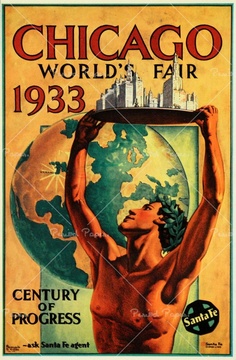
As they are every spring and summer recreational softball leagues are in full swing across the country. Softball is now a time-honored pastime, as well as a competitive team and school sport that traces its roots back to 1887. However, the present form of softball started with a tournament at the 1933 Chicago World’s Fair.

The Fair, officially called “A Century of Progress International Exposition,” ran throughout 1933 and into 1934 to celebrate Chicago’s centennial.

chicago

Leo Fischer, a Chicago sports writer teamed up with Michael Pauley, a sporting goods salesman to promote a softball tournament as part of the World’s Fair festivities. Together they raised $500 to get their game included and they also travelled around the country recruiting and inviting teams to compete.

Softball had been played by town or company teams, as well as by local parks and recreation sponsored leagues since the early 1900’s, but no tournament like the one planned for the World’s Fair had ever been organized before. As the Chicago American newspaper wrote, “it is the largest and most comprehensive tournament ever held in the sport which has swept the country like wildfire.”

Fischer and Pauley brought 55 teams to their tournament and a crowd of 70,000 was on hand to watch the first game. After several days and rounds of play the J.L. Friedman Boosters team from Chicago beat Briggs Beautyware of Detroit to win the tournament. Overall more than 350,000 spectators watched the softball games.

The fact that so many people watched and that teams from across the country came to compete illustrated the tremendous popular appeal of softball. The success of their World’s Fair tournament directly led Fischer and Pauley to form the American Softball Association (ASA) in 1934.

The ASA established uniform rules for league softball and continues to oversee the sport on a national level. After the World’s Fair softball’s popularity continued to increase and leagues eventually sprang up in every state.

In 1940 Fischer wrote the book How To Play Winning Softball and he was President of the National Basketball League (the precursor of the NBA) from 1940-1944.

Two Chicago sports fans, a newspaperman and a salesman, staged a tournament when the world came to Chicago in 1933 and as a result softball came to be as an organized, recognized sport, now played on the national and even international stage.

Crush Holloway

By Michael LeCompte

In the late nineteenth century “crashes” where two old locomotives were sent speeding into each other for recreation, were commonplace. The collisions offered spectacle and excitement.

On September 16, 1896 a man was awaiting a “crash” when someone told him his wife was in labor at the hospital. The man raced to the hospital in time to witness the birth of his son and named him Crush Christopher Columbus Holloway, after the sound the two colliding trains would make.

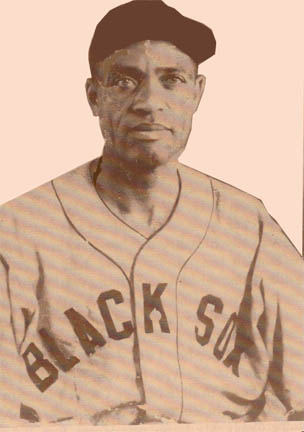
From humble beginnings Crush Holloway would go on to have a 16 year Negro League career and become one of the most feared and respected base stealers in all of baseball, white or black.

crush

Crush grew up on a cotton farm in Waco, Texas and played baseball every Sunday, usually two or three games on the one day of the week that there weren’t farm chores to do. Though often playing with homemade equipment, their baseballs were a mass of twine and tape, Crush honed his skills by hitting rocks in his family’s cotton fields with a broomstick for a bat.

Crush’s father depended on him to help run the farm and while he was always loyal, he also sought any way off the farm he could. During World War I he tried to join the Army, but the quota of enlisted men from his home county in Texas had already been filled.

In 1919 when Crush was 21 he finally made it off the family farm when he began his professional baseball career with the San Antone Black Aces and he never looked back. After two years with the Black Aces in the otherwise all-white Texas League he went east and began a career in the Negro League that would include stints with teams in Indianapolis, Baltimore, New York, and Detroit.

Standing an even six feet tall and weighing 180 pounds Holloway was a slick fielding outfielder, but was best known for his ferocious, aggressive base running. Known to sharpen his spikes before games, Crush would then slide in fast, spikes high. (Although statistics are incomplete Holloway led the entire Negro League in stolen bases at least once).

Speaking about the state of baseball in 1969, as chronicled in John Holway’s Voices From the Great Black Baseball Leagues, Crush’s comments still ring true today, “baseball’s so gentlmanfied now…they don’t play it now like they used to. We played with the heart. Today they play it for money. They don’t hustle like they used to. We’d do everything to win.”

Following his successful and memorable baseball career, in which he compiled a .294 batting average, Holloway moved to Baltimore and ran a small tailor shop until his death from cancer in 1972.

Brady’s Deflated Legacy

By Michael LeCompte

Barry Bonds, Lance Armstrong, Tiger Woods, A-Rod, among others, and now…Tom Brady, 4-time Super Bowl Champion and reigning golden boy of the NFL, can count himself a member of this dishonored club of athletes who have disgraced themselves and their sports.

The 243 page Wells Report, concerning whether Brady used underinflated footballs in the AFC Championship game, was released on Wednesday presenting a clear picture of his collusion in the deflategate controversy and instantly tarnishing his legacy.

Page 2 of the report compiled by attorney Ted Wells states that, “based on the evidence, it is our view that it is more probable than not that Tom Brady was at least generally aware of the inappropriate activities.”

That’s safe, legal speak. Of course Brady knew the balls were deflated. No one believed for an instant that the quarterback wouldn’t or couldn’t know that the balls he was throwing were somehow off. (Brady’s absurd denials are akin to a pitcher in baseball saying he didn’t know the ball he was throwing was missing a few seams)

The Wells Report goes on to detail the actions of a Locker Room Attendant and an Equipment Assistant and their interactions with Brady.

Locker Room Attendant Jim McNally (who referred to himself as the “Deflator” in texts with friends) and Equipment Associate John Jastremski exchanged texts and emails discussing Brady’s preference for “squishy” footballs as far back as an October game against the Jets.

Furthermore, eight days before the AFC Championship game when the Patriots were caught Brady personally delivered two signed footballs and a game worn jersey to McNally. Evidently those gifts were enough to make McNally sneak the game balls out of the referee’s locker room and into a bathroom for 1 minute and 40 seconds before the Championship game.

After the Patriots won, but were found out, Brady invited Jastremski into the QB room for a private meeting. (The only time in 20 years that the Equipment Assistant had ever been in the QB room). There’s no proof of what went on behind closed doors, but presumably Brady was telling him to keep quiet.

Superstar quarterbacks usually aren’t personal friends with locker room and equipment personnel, but the report reveals a series of phone and text messages between Brady, McNally, and Jastremski immediately after the Championship game and in the days following.

Brady made himself available for one day of the Wells Report’s investigation and refused to turn over his cell phone or any emails (perhaps further proving he had something to hide). The phone records of McNally and Jastremski provided more than enough evidence to establish Brady’s guilt, though.

The NFL is expected to suspend Brady next week (probably somewhere between 2 and 8 games) and the Patriots will reportedly be fined and possibly lose some draft picks.

For sports fans it is often hard to comprehend why athletes cheat. The ones who get caught are usually the ones who didn’t need to cheat to gain an edge to begin with (Bonds and A-Rod were first ballot hall of famers without the steroids, Armstrong getting out of that hospital bed and even competing again was inspirational enough).

In Brady’s case he certainly didn’t need any advantage against the Colts as the Patriots won 45-7. The deflated footballs probably had no impact on the outcome of the game, but Brady used them anyway. He cheated because he wanted or needed to get back to the Super Bowl at the age of 37, so he did everything he could to make that happen.

Tom Brady is a cheater. Although he will be reviled across the country, fans in Boston will continue to love him, and unfortunately for Seattle, which will eternally be one yard away from a second Super Bowl victory, he proved that cheaters do sometimes prosper.

Brady’s legacy is now in tatters, the label of “cheater” will follow him throughout the rest of his career. He may be a 4-time Super Bowl Champion (tied with Terry Bradshaw and Joe Montana for most all-time) yet any discussion of his place among the greats will now be followed by a “yeah, but…”

Of Field and Page: The Writing of Matt Christopher

By Michael LeCompte

For kids growing up as sports fans perhaps the only thing better than playing or watching sports is reading about them. Since the 1960’s Matt Christopher has written perhaps the most well-known sports stories for children. His tales of athletic triumph and heartbreak are staples in elementary and middle school libraries. For some of us it was a combination of Christopher’s sports books and Hardy Boys’ mysteries that saw us through the book report requirements of school.

The oldest of nine children Christopher was born in Bath, Pennsylvania in 1917 and was a natural athlete, excelling in every sport he tried throughout high school, especially soccer and football. When he graduated from high school in 1935 he played semi-professional baseball in Ontario with the Smith Falls Beavers. However he soon realized he couldn’t consistently hit professional pitching and a knee injury forced him to retire.

In 1940 Christopher was married and eventually had four children. He worked full-time for General Electric, but never forgot his passion for writing. Later he would say that his love of writing came from winning a prize in a short story contest at about the age of 17 (there were 200 winners and he came in 191st).

He wrote a play and a detective story in his spare time that he sold for $5 and $50. After that initial success he wrote a detective story a week for forty weeks, sold a few short stories, and wrote twelve novels (all of which were rejected by publishers).

Like any number of the athletes he would later create in his fiction Christopher was undaunted by his early failure, though, and continued to write in his free time. In 1954 his big break finally came, when at the urging of the General Electric branch librarian, he wrote The Lucky Baseball Bat, a children’s sports novel. Although he only made $250 from the book it launched his prolific career as a children’s author.

By 1963 Christopher was able to retire from General Electric and write full-time. His books chronicled virtually every sport from lacrosse and dirt bike racing to volleyball and every sport in between. Some of his most beloved novels dealt with baseball and football, though, such as Wild Pitch, The Catcher With A Glass Arm, The Kid Who Only Hit Homers, Tough To Tackle, and Crackerjack Halfback. Throughout his illustrious career Christopher wrote more than 100 sports themed children’s novels.

Although he passed away in 1997 the Christopher family still oversees the production of books by various authors under the trademark of Matt Christopher.

Why Pete Rose Benefits From Baseball Banishment

By Michael LeCompte

With a new commissioner at the helm, the All-Star game being held in Cincinnati this year, and the Ohio State Legislature acting on his behalf, there is rampant speculation that Pete Rose could soon be re-instated by Major League Baseball.

Playing for the Reds and Phillies from 1963-86, Rose certainly put up Hall of Fame numbers. He was a career .303 hitter, made 17 All-Star games at 5 different positions, won 3 World Series titles, and is the Majors’ all-time leader in hits with 4,256.

However, Major League Baseball conducted an exhaustive investigation of Rose in 1989 when he was manager of the Reds, due to allegations of gambling. Rose’s bookies were interviewed and provided detailed accounts of his gambling over the course of the 1985 and 1986 seasons, claiming he wagered between $2,000 and $10,000 a day on professional sports, including baseball. The investigation also revealed that Rose bet on 52 Reds games during the 1987 season.

A. Bartlett Giamatti served as Commissioner of Baseball for less than 6 months, but his decision to ban Rose for life in 1989 has been debated for decades.

On August 24, 1989 Rose accepted designation on Baseball’s Permanent Ineligible List and in return Major League Baseball agreed to make no formal finding on its investigation into his gambling. As part of his banishment Rose was allowed to apply for re-instatement once a year after an initial 10 year period.

In 1991 the Hall of Fame decided to ban those on the Permanently Ineligible list from induction.

Since his banishment Rose has been to prison for tax evasion, enjoyed a few stints on tour with the WWE, married a Playboy model, starred in a reality show, and currently earns more than $1 million a year attending autograph shows. Although he dutifully applies for re-instatement every year, banishment was clearly the best thing that could have happened to Rose, post-baseball.

Without his banishment there is no spectacle, no curiosity to Rose. If “Charlie Hustle” couldn’t play the victim, wronged by the game he loved, there would have been no book deal or business opportunities, the public wouldn’t care about yet another overweight ex-jock.

However, the debate over whether he deserves to be in the Hall of Fame or not has kept Rose relevant, kept him in the public eye. Interestingly, if he were actually in the Hall, Rose would largely be forgotten by now. He would be a great talent among many in the Hall. People would remember him as a hard-nosed player, the guy with the most hits ever, but he wouldn’t be constantly looming over baseball, hovering in the public consciousness.

Baseball, the game and its fans, have largely moved on from Rose, much like they have distanced themselves from players of the recent steroid era. Eventually the Hall of Fame will face a crisis over whether or not certain players who definitely impacted the game, despite certain moral flaws should be let in.

An interesting scenario could also allow Rose to be inducted into the Hall of Fame without being re-instated by Major League Baseball. The Hall of Fame is an independent entity, one not operated by Major League Baseball, which means that, although they voted to bar him in 1991, the Hall could put Rose on an induction ballot any time they saw fit to do so.

Whether the Baseball Writers’ Association of America (who have been loathe to vote for players with any ties to controversy, such as the steroid era recently), would consider voting for Rose’s induction is unclear.

Rose has said that he would like to meet with new Commissioner Rob Manfred and the Commissioner’s office is in the process of reviewing all of its original case against Rose. Although Rose will be allowed to participate in the All-Star game festivities in Cincinnati, it is unclear which way Manfred is leaning regarding re-instatement. In March the Commissioner stated that, “…baseball’s rules for gambling have been in place for literally decades. They’re clear and spell out specific penalties. The reason those rules exist is that gambling is corrosive in a number of ways, including raising the specter of somebody not doing everything they can to win.”

Whether Rose deserves to be in the Hall of Fame or not, the fact is that he did bet on baseball, which does “violate or tarnish the integrity of the game” and which is a banishable offense.

Whether he is ultimately re-instated or not, the debate over Rose will continue, but for now banishment from baseball may just be the best gift he ever received. Now 73, Rose can be a millionaire just by being Pete Rose and signing his name.

MLB’s “The Plan”

By Michael LeCompte

During the 2012 Major League Baseball season only 4.3% of players in the league had a college degree. There are many reasons for this low number. Players are drafted right out of high-school or sign with a big-league team after a few years of college and begin their journey to the bigs.

The lure of a professional contract is a stronger pull than the thought of working hard in the classroom and on the field, while struggling economically for the next four years at college. Many athletes also decide to play the game as long as they can, until teams or their bodies tell them they can’t anymore, figuring there will always be time to finish school when they retire.

Like all professional sports there is too much money in Major League Baseball, but a little known plan in baseball does benefit former players off the field and help them get back into the classroom.

In the early 1960’s Major League Baseball established the Professional Baseball Scholarship Plan to help players fund their college careers.

Now referred to as the “Plan” it offers benefits to players who negotiated for participation in the plan as apart of their first minor league contract. Generally, even if a player goes on to have a 10 year career with 5 different teams, the club that originally signed the player maintains responsibility for paying for the player’s education.

There are four basic rules that a player must adhere to in order to retain eligibility under the “Plan.”

1.) A player must commence their studies within 2 years of their last day of active playing service. (Playing for a minor league team does not affect eligibility, however, signing with an independent league does result in ineligibility)

2.) If a player commences their studies under the “Plan” after their last day of playing service and then fails to attend college within 2 years of their last college class they become ineligible.

3.) If a player is placed on the ineligible list for any reason by Major League Baseball they lose all benefits of the “Plan.”

4.) If a player is unconditionally released or retires they maintain their eligibility

Under the “Plan” Major League Baseball pays up to $3,000 per quarter for a player’s tuition. (That number is fairly low and might not cover all of a former player’s tuition, a fact which MLB makes up for by completely covering a student’s room, board, and textbooks.)

Major League Baseball’s the “Plan.” A little-known, but valuable asset for baseball players. Only the greatest of players in the rarest of occasions enjoy long careers in professional sports, most athletes play five years or less, meaning they will spend a lot more of their lives as “former athletes” rather than “athletes.”

The “Plan” is a tool at their disposal to help former athletes be as successful in life as they once were on the field by allowing them to earn their degrees.

Tebowmania Could Soar With Eagles

By Michael LeCompte

Tebowmania is back. After being out of the NFL since a 2013 preseason stint with New England, Tebow signed a contract with Philadelphia on Monday. The much-analyzed and often scrutinized quarterback has finally made it back to the promised land.

Although Philadelphia may be his last shot at the NFL (career numbers of 17 TD’s, 9 INT’s and a 47.9% completion rate don’t exactly inspire confidence), the Eagles are also his best chance for success.

Denver’s offense called for a traditional pocket-passing quarterback and after some limited success realized Tebow didn’t fit there. The Jets were never quite sure what to do with him and as a result he didn’t make it on the field enough to contribute and in New England, with its disciplined and regimented style, there was never quite a place for him with the offense.

Philadelphia coach Chip Kelly’s high-powered, up-tempo offensive system is exactly the kind that could utilize Tebow and his unique skill set. Kelly’s offense is similar to the type Tebow ran to perfection in college at Florida and the Eagles could benefit from having 15-20 plays designed for Tebow, either at quarterback or with the ball in his hands at some other position, such as running back or receiver.

Kelly is not afraid of making big moves and Tebow is the latest. He sent Lesean McCoy to Buffalo and has brought in Byron Maxwell and Demarco Murray this offseason.

Tebow is a high-character guy who will work hard and give the Eagles everything he has, thankful for the opportunity they have given him. However, it will be hard for him to crack the 53 man roster at quarterback unless he proves himself indispensable. Sam Bradford is the projected starter in 2015 and he is backed up by the inconsistent Mark Sanchez and the overrated Matt Barkley (both of whom probably only have NFL careers because they quarterbacked at USC).

It will be fun to watch Tebow compete for a roster spot this offseason. Whether we believe he can ever be an NFL quarterback or not, there is something relatable about his story. Tebow is a man who has been told multiple times that his NFL career was over, yet he kept the dream alive, even as he has found success as an SEC broadcaster and contributor for Good Morning America. Over the past two years away from the game he has been working with a quarterbacks coach to refine his mechanics and is now apparently throwing better than he ever has. His workman-like effort to get back to the NFL is laudable.

Regardless of whether Tebowmania runs wild during the 2015 season or if he fails to make Philadelphia’s 53 man roster, the NFL should keep Tebow around in some official capacity. Tebow is good for the NFL’s image. He is the anti-Ray Rice. Who knows, perhaps he could run an NFL mentoring program for other young quarterbacks whose game’s are not really compatible to the NFL and who struggle with off-field issues, such as Johnny Manziel or the about-to-be drafted Jameis Winston.

The First Million Dollar Athlete Endorsement Deal

By Michael LeCompte

Athletes make natural advertising pitchmen. They are watched by a large swath of the population on a regular basis and everyone dreams of doing what they do on the field. While we’re probably never going to make it into the game an athlete endorsing any given product does somehow make them seem just a little bit more human, more like us. Therefore, if we consume whatever product they’re pitching, we too, can be like them in some small way.

Today multi-million dollar athlete endorsement deals are commonplace. We can’t make it through an NFL game without Peyton Manning pitching us pizza, Buicks, insurance, and Sony TV’s (which actually might just cover all of our needs as humans and sports fans).

However, the first million dollar athlete endorsement deal came long before Manning and even decades before Michael Jordan turned his marketing opportunities into a now billion dollar empire. Surprisingly it did not come from one of the big three sports of football, baseball, or basketball either. Rather it came from the lanes, from the sport of…bowling!

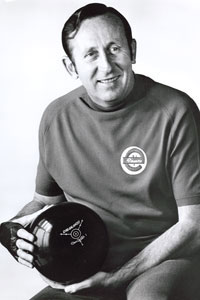
Today bowling is a casual sport undertaken with friends and in beer leagues, but from the 1950’s through the 1970’s, bowling was a big-time sport and no one in that era was more dominant than Don Carter.
carter
Born in St. Louis in 1926 Carter grew up around bowling and worked as a pinsetter from an early age. In high school he was a baseball star and initially harbored professional aspirations in that sport.

In 1944 he enlisted in the Navy and served two years as a radar man in the South Pacific.

In 1946 he signed a $150 a month minor league baseball contract with the Philadelphia Athletics. He spent one year playing for North Carolina in the Tobacco State League, where he hit .302, but went just 3-7 with a 4.19 ERA as a pitcher.

After returning to St. Louis he worked as an alley man, janitor, and bartender at his local bowling alley and continued to bowl every chance he got. In 1951 he earned a spot on the Pfeiffer Beer team in Detroit and began his professional career.

Carter went on to become a 6 time Bowler of the Year and a 10 time All-Star who, by the 1950’s had come to be known as “Mr. Bowling.”

In 1958 he was a founding member of the Professional Bowler’s Association (PBA) and served as the organization’s first president. By the early 1960’s with tournament winnings and endorsement deals Carter was making over $100,000 a year.

In 1964 he signed the first million dollar endorsement deal in sports history with the Ebonite Bowling Company.

Ebonite manufactured the “Don Carter Gyro-Balanced Ball,” still one of the best-selling bowling balls ever.

Although a knee injury forced Carter to retire from competitive bowling in 1972 he continued to set the precedent for athlete endorsements by pitching everything from bowling supplies to Wonder Bread and Miller Lite.

Don Carter passed away in 2012.