Chuck Taylor: The Man Behind The Star

By Michael LeCompte

It is estimated that 60 percent of Americans either currently wear or at some point in their lives owned a pair of Converse Chuck Taylor All-Stars or “Chucks.” The All-Star is the best-selling basketball shoe of all-time (far surpassing the Nike Air Jordan even). Just who was Chuck Taylor, though, and how did his name come to be on every pair of the now iconic sneakers.

Chuck Taylor did not in fact invent the All-Star. Converse had been making athletic shoes since the early 1900’s and Taylor himself wore them as a high-school basketball player in Ohio in 1917.

The Converse company sponsored a basketball team called the All-Stars that travelled the country putting on basketball clinics and selling their shoes.

In 1921 Taylor got a job with Converse and started publication of the Converse Basketball Yearbook in 1922. The yearbook highlighted the best players and teams in the country, while promoting the All-Stars’ team.

By the mid 1920’s Taylor was traveling with the All-Stars, selling shoes to teams around the country. He also changed the design of the original All-Star shoe so that it provided more support and flexibility, adding the now-familiar circular white patch on the ankle.

chuck

In 1932, due to the changes he implemented, the shoes officially became the Converse Chuck Taylor All-Star, with his name in the white patch on every pair.

Taylor was instrumental in getting basketball recognized as an Olympic sport for the first time before the 1936 games. For the Olympics Converse produced the All-Star in a color other than black for the first time when they outfitted the U.S. team in white shoes.

During World War II Taylor was a fitness consultant for the Army and Chuck Taylor All-Stars became the official sneaker of the Armed Forces.

By 1966 Converse controlled 80 percent of the American athletic shoe market. Throughout his career Taylor received a salary from Converse, but no commission on the millions of pairs of shoes he sold. (A fact he reportedly made up for with his liberal, even extravagant use of the company expense account). He was elected to the Basketball Hall of Fame in 1968 and died a year later.

In 2003 Converse filed for bankruptcy and was bought by Nike. Today All-Stars continue to be produced by Nike through its Converse division. The shoes are now available in every color of the rainbow and can even be personalized online.

The original Chuck Taylor All-Star, with its simple style and canvas construction has endured, once dominating all levels of athletics, and which has since been embraced and re-discovered by generations of the main stream and counter-culture.

Over 700,000 pairs of Converse Chuck Taylor All-Stars are sold each year and 800 million pairs have been sold all-time.

Challenger’s Chance

By Michael LeCompte

Sports fiction, chronicling the thrill of victory, the agony of defeat, and the love of the game is perhaps as old as sport itself.

Introducing Challenger’s Chance, a new children’s sports fiction novel by Michael LeCompte in the proud sporting tradition of the likes of Matt Christopher and Mike Lupica.

For twelve year old Bobby James basketball is life. He dreams of starting at point guard for the Winthrop Academy Bulldogs, just like his father did. Bobby is the shortest player on his team, though, and the harder he works to make the starting five the worse things seem to get, at home and for the team.

A new coach and the trials and triumphs of sixth grade life challenge Bobby’s determination to get on the court and make the All-City Playoffs.

Can Bobby get in the game before it’s too late? Can his team come together and defeat their archrival?

Find out in Challenger’s Chance, a story of life, family, and basketball available now as an amazon ebook for $0.99

Tom “Pee Wee” Butts

By Michael LeCompte

At 5’7” and 140 pounds Tom “Pee Wee” Butts was one of the smallest men to ever play in the Negro League and over a 19 year career he was arguably the best shortstop in the game.
peeweebutts
Tom Butts was born in Sparta, Georgia in 1918. He was a baseball and football star in high school, once quarterbacking an entire game after breaking his nose in the first quarter.

He dropped out of high school at 17 to play baseball for the Atlanta Black Crackers. Speaking at the age of 50 Butts was grateful for his career in baseball, but opined that “the one thing I regret was, I shouldn’t have quit high school.”

During his second season in Atlanta the Baltimore Elite Giants offered him a contract after playing against him. He played the next nine seasons with Baltimore, winning one pennant.

Butts was a shortstop with excellent range and a strong, if sometimes erratic arm. During one game early in his career he threw three balls into the stands while attempting to throw runners out at first base. Following advice from his coach he relaxed in the field and learned to field every grounder effortlessly with two hands, which led to his second nickname of “Cool Breeze.” He was widely considered the Phil Rizzuto of the Negro League.

Throughout the 1940’s and 1950’s he played in Cuba, Puerto Rico, Mexico, and Canada. The closest he came to the Major Leagues was playing one season in Nebraska for the Philadelphia A’s single A affiliate.

During his career Butts watched as several teammates made it to the Major Leagues, while he was continuously looked over. He attributed the fact that he never made it more to his age, rather than his race or diminutive size, saying “if I’d been ten years younger, I think I could have made the Major Leagues…if the doors had opened up a little earlier, I think I’d have done pretty good, I could have been up there too.”

Butts finally retired in 1955 after one season with the Texas City Texans of the Big State League.

He passed away at the age of 53 in 1973.

With a .316 batting average and a 19 year career, Tom “Pee Wee” Butts was truly a giant of the Negro League.

Pastime: A Review

By Michael LeCompte
pastime
As we anxiously await Major League Baseball’s opening day, still a few weeks away, we can get ourselves in the mood by watching our favorite baseball movies. Baseball’s cinematic canon is expansive, composed of comedies, biopics, and dramas.

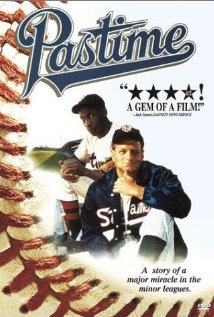
TV networks seem to run the most well-known baseball films, the Bull Durham’s, Field of Dreams, and Major League’s this time of year, however, Pastime, one of the lesser-known baseball movies of the past thirty years is definitely worth a watch.

Set in the California D-League of 1957, Pastime examines the relationship between Roy Dean Bream, a 41-year-old relief pitcher and a 17-year-old rookie starting pitcher named Tyrone Debray.

Roy Dean, played by William Russ (perhaps best known as the dad on Boy Meets World), is a good-natured, lovable character hanging on against all odds to the game he loves.

Although he’s reached his last stop in organized baseball and knows it, Roy Dean refuses to admit it, even to himself. He’s fueled by his positive nature, a love of the game and the fact that twelve years prior he’d enjoyed a painfully brief stint in the majors.

Roy Dean’s positive attitude is resented by his teammates who are desperately trying to move up the professional baseball ladder, rather than just playing the game for the joy of it.

When Tyrone Debray, an African-American pitcher joins the team the two outcasts forge an unlikely bond. They are each resented, Roy Dean because he’s washed-up and Tyrone because of his race.

Roy Dean sees beyond Tyrone’s race and appreciates his talent. He becomes a sort of mentor for the young pitcher, teaching him to stand up for himself on and off the field, while developing his skills.

Tyrone presents Roy Dean with yet another reason to stay in the game, the opportunity to see his friend move on in the game the way he never quite could. He lives somewhat vicariously through Tyrone and he will certainly live on through what he teaches him as a pitcher.

Jeffrey Tambor and Noble Willingham give excellent performances as a team owner sick of losing both games and money and as the veteran manager of the team and clubhouse ally of Roy Dean.

Together Tyrone and Roy Dean weather the trials of a baseball season, resentful teammates, and racism. A love story is woven into the film for good measure, but the real love of both Tyrone and Roy Dean is baseball.

Baseball with its cruel irony, unfortunate breaks and bounces of the ball, and occasional triumphs is a metaphor for life in Pastime. Roy Dean is relatable as the kind-hearted everyman and we can’t help but root for Tyrone.

D.M. Eyre, Jr. wrote Pastime as a tribute to small-town baseball and his love for the game is evident in the look and feel of the film. Dusty fields, half-full stadiums, and rickety team buses clearly convey both the dreams and the quiet desperation of life in the minor leagues.

Despite being fairly well-reviewed Pastime had a very limited theatrical run, grossing only $270,000.

However, it was screened at the Sundance Film Festival under its original title One Cup of Coffee in 1991 and received the audience award.

Pastime is currently available on Netflix.

The Doctor Behind The Athletes: James Andrews

By Michael LeCompte

Sports medicine is a massive industry encompassing all levels of any sport. Professional teams have training staffs, doctors, and specialists to either prevent or deal with any conceivable injury.

Trainers and doctors do their best to keep players in the game when injuries occur during the action. Sometimes, though, surgery is needed and then superstar athletes usually turn to one man. Dr. James Andrews is that man.

We’ve probably all heard his name mentioned by athletes and announcers, but who exactly is Dr. James Andrews? and why do athletes trust his opinion and expertise above all others in the sports medicine community, often opting to go under the knife or forego surgery based on his examinations or analyses?

James Andrews was born in 1942 and grew up in Homer, Louisiana and attended Louisiana State University, where he was a Southeastern Conference pole-vaulting champion in 1963.

He attended medical school at Tulane and became an orthopaedic surgeon, specializing in damaged ligaments, especially those of the knee, elbow, and shoulders.

Similar to some of the athletes he would later treat that were drafted by the right team at the right time to become stars, Dr. Andrews’ career took off in the early 1970’s with the popularization of arthroscopic surgery.

Arthroscope technology (a device inserted into the patient to see the interior of a particular joint) had been around for decades, but Dr. Andrews was one of the first to truly embrace the procedure, becoming proficient and ultimately prolific at it.

Over the years Dr. Andrews client list has come to resemble an all-star game roster or perhaps a Hall of Fame brochure. He’s operated on the likes of Bo Jackson, Jack Nicklaus, Michael Jordan, Tom Brady, Drew Brees, Robert Griffin III, Lindsey Vonn, Roger Clemens, and John Cena, just to name a few.

He founded the Andrews Sports Medicine and Orthopaedic Center in Birmingham, Alabama and was a co-founder of the American Sports Medicine Institute. Additionally Dr. Andrews serves as the team doctor for Alabama, Auburn, and the Washington Redskins.

Recently Dr. Andrews has spearheaded a movement to stem the rising tide of overuse injuries so prevalent in sports, especially baseball. His 2013 book Any Given Monday examines how to prevent injuries from youth sports to the pros.

Dr. Andrews’ work prolongs and in some cases even saves the careers of athletes and his own stats are amazing. Although he has begun to cut back over the past decade, throughout his career he regularly performed over 1,000 surgeries a year, and to date he has performed over 4,000 Tommy John procedures. Through all the years and countless clients and surgeries he only has one blemish, a single malpractice suit, on his medical record.

The longevity of his career and the work he has done will undoubtedly land him in multiple sport Halls of Fame whenever he retires.

For now, though, Dr. James Andrews is still a rock star of an orthopaedic surgeon, even at 73 years old. He leads the kind of fancy life his athlete clients could appreciate (including the luxury cars and 50 foot racing yacht), however, unlike his patients he has achieved this status with his mind rather than his body.

Through his contribution to sports medicine Dr. James Andrews has impacted the games we love to watch. He’s kept our favorite players going, reminding us that the most important person in the game isn’t always on the field.

Jackie Mitchell

By Michael LeCompte

Jackie Mitchell grew up in Chattanooga, Tennessee and learned to love the game of baseball, especially pitching, from a neighbor. She primarily threw a “drop pitch” or what today would be considered a 12-6 curveball, that dropped out of the strike zone as it crossed the plate.

In 1931 at the age of 17 Mitchell was signed by the Chattanooga Lookouts, a double-A team. The Lookouts President Joe Engel added her to the team as a depression-era publicity stunt and the move was not well received in the press, with one paper commenting that “the curves won’t be all on the ball.”

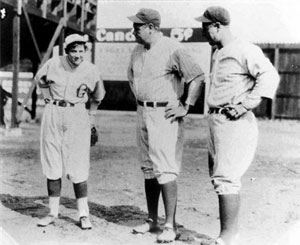
The Yankees stopped in Chattanooga for two games against the Lookouts on their way home from spring training in 1931. In the first game Mitchell accomplished the monumental feat of striking out two of the greatest baseball players of all time, Babe Ruth and Lou Gehrig, back to back.
jackiemitchell
After the first two batters of the game the Lookout’s starting pitcher was pulled and Mitchell was brought in to face the Sultan of Swat and the Iron Horse in front of 4,000 fans.

Her first pitch to Ruth was low for a ball. He swung through the next two, and then was called out on a pitch over the outside corner of the plate that he didn’t swing at.

Mitchell then struck Gehrig out on three straight pitches, with him swinging and missing on all three.

After walking the next batter Mitchell was pulled from the game and the Lookouts went on to lose 14-4.

Mitchell’s performance was the stuff of instant legend and was profiled in the national newspapers of the time. However, the strikeouts were seen as nothing more than a publicity stunt by some, with the New York Times writing that Ruth, “performed his role very ably” and that Gehrig “took three hefty swings as his contribution to the occasion.”

Critics of Mitchell’s accomplishment, in 1931 and since, point to the fact that the game, played on April 2, was originally scheduled for the previous day, April Fool’s day, before being rained out and therefore it must have been a stunt.

Only Ruth and Gehrig could have quieted the critics who claimed they intentionally struck out. Gehrig was always silent on the matter and all Ruth ever said about being struck out by a woman was “I don’t know what’s going to happen if they begin to let women in baseball.”

Shortly before her death in 1987 Mitchell reiterated what she had always believed, that her strikeouts were legitimate, by saying of Ruth and Gehrig, “why hell they were trying, damn right.”

If they were legitimate strikeouts then perhaps they are not that surprising. Mitchell was left-handed, as were both Ruth and Gehrig. The lefty vs. lefty matchup naturally favors the pitcher. Ruth may have been one of the greatest home run hitters ever, but he was also a free swinger who struck out over 1300 times in his career.

Hitting a baseball is about timing and familiarity. Ruth and Gehrig had certainly never faced Mitchell before, so perhaps their swinging strikes were not so unexpected.

Myths, memories, and half-truths are part of any legend, including baseball. From Abner Doubleday supposedly inventing the sport to Babe Ruth perhaps calling his shot and the possibility of a farmer’s goat cursing a team, sports legends may be grounded in fact, parts of them may be embellished, but they are still part of the game, comprising its colorful history.

Likewise, Mitchell may have been signed as a publicity stunt, but it’s also probable that both Ruth and Gehrig underestimated her skills as a pitcher and that she legitimately struck them out.

Although Mitchell retired from baseball in 1937 to work for her family’s optometrist business, her time on the diamond resulted in the memory of a lifetime, that of striking out Babe Ruth and Lou Gehrig back to back.

The House Of Davids Barnstorming Baseball Team

By Michael LeCompte

Throughout the first half of the twentieth century it was common for baseball teams to tour the country, playing games and making money wherever they could. The House Of Davids from Benton Harbor, Michigan were one of the most interesting and successful of these teams.
house-of-david-baseball-team-598

Unable to shave or cut their hair due to their religious beliefs the team always drew a curious crowd and although they kept no official statistics, it’s estimated that the House Of Davids won about 70% of the games they played.

In 1903 Benjamin and Mary Purnell founded the Israelite House of David in Benton Harbor. The goal of the religious commune was to gather the 12 lost tribes of Israel and await the millennium.

Eventually over 1,000 people joined and Ben Purnell set about making money to support his community. He opened an ice cream parlor and later an amusement park to raise funds. However, his most memorable endeavor was the House Of Davids baseball team.

The team was formed in 1913 and began barnstorming in 1920. With their long hair and beards they were an immediate attraction on the road. The goal of the team was to raise money for the commune and to spread the faith. (Which may have been why they kept no statistics).

The House Of Davids played town and semi-professional teams around the country. They also frequently played Negro League teams and even travelled with the Kansas City Monarchs for a time.

By the mid-1920’s Purnell recognized that to keep making money with his team they needed more talent than the members of his small community could provide.

As a result The House Of Davids began letting non-commune members onto the team. The one stipulation, though, was that any player who signed a contract could not shave for the duration of the contract. This was done to keep up the appearance and thus the attraction of the team.

Purnell once offered Babe Ruth a contract, but was turned down. However, the famous pitcher Grover Cleveland Alexander did accept a contract offer after he’d retired from professional baseball, once famously quipping that “if you want to see the world join the Navy, if you want to see the United States join the House Of Davids.”

In 1926 Benjamin Purnell’s community fell apart when he was accused of the sexual molestation of the children in his commune, as well as fraud. 13 women testified against Purnell and he was convicted.

During the trial it was revealed that Purnell had amassed a $10 million personal fortune off the proceeds and fundraising efforts of his followers. He was ultimately banished from the community he founded and died of tuberculosis in 1927.

Although the community split into two factions after Purnell’s death, the baseball team continued. In 1930 the House Of Davids played the first unofficial night game in baseball history (a full 5 years before Major League Baseball’s first night game), when they set up portable lights for a game in Kansas. The team barnstormed until the late 1930’s.

The House Of Davids began as an act of faith, but are remembered today for the spectacle of long hair and beards, their willingness to cross the color line in the 1920’s, and some pretty good baseball.

The “Mendoza Line”

By Michael LeCompte

The “Mendoza Line is widely considered the batting average cut-off point below which a baseball player should not be on a Major League roster. Most fans have heard of it, but why is the “Mendoza Line” the arbitrary point at which a team realistically gets no return on their investment in a player? and who is Mendoza? Just why has his name become synonymous with failure?

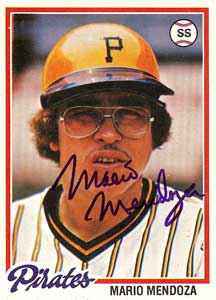
Mario Mendoza was a 5’11” 170 pound shortstop from Chihuahua, Mexico, who played for the Pirates, Mariners, and Rangers from 1974-’82, compiling a .215 lifetime average with 4 home runs and 101 RBI’s.
mario_mendoza_autograph

After retiring from Major League baseball Mendoza played for another seven seasons in Mexico, over which he hit a respectable .291.

He managed in the Angels and Giants organizations in the California and Texas Leagues from 1998-’02 before returning to Mexico to coach.

As popular legend has it George Brett, himself a great hitter, first coined the term “Mendoza Line.” In a 1980 interview with Chris Berman, Brett said “the first thing I look for in the Sunday paper is who is below the Mendoza line.” The loud-mouthed Berman then ran with the phrase, using it liberally in Sports Center segments throughout the 1980’s.

According to Mendoza himself, though, the term “Mendoza Line” actually began as a clubhouse joke, initiated by his Mariners teammates Bruce Bochte and Tom Paciorek early in the 1979 season after he got off to his usual slow start at the plate.

The Collins dictionary defines the “Mendoza Line” as “the line between being mediocre and awful.” Although it’s certainly not in any official baseball rule book the “Mendoza Line” (a batting average of .200) has persisted for over 35 years as the threshold of incompetent hitting. (Even though Mendoza’s lifetime average was actually .215)

Regardless of how good a player may be in the field, and Mendoza was an excellent shortstop with a career fielding percentage of .960, if they consistently hit below the “Mendoza Line” they are considered more of a liability than an asset for their team.

The “Mendoza Line” has gone beyond the baseball diamond and is often jokingly used to describe any form of professional mediocrity in popular culture.

From 1996-’07 a rock band called “The Mendoza Line” released 8 albums. The indie rockers formed the band in college and have acknowledged they decided on the name after hearing about the career of Mario Mendoza.

Perhaps fitting for a band named for the line between mediocre and awful, their albums were often well-reviewed, but sold poorly.

The “Mendoza Line” may be synonymous with failure, the phrase may be used jokingly, but Mario Mendoza was good enough to play professional baseball for 8 seasons. If he had hit, say .270 or even .250, he would have been just another player that enjoyed a decent career, but his shortcomings at the plate have made him legendary. Paltry as it may be, his .215 average is exactly .215 more than most of us could ever hope to hit against big-league pitching.

The Worst Athletes Turned Actors

By Michael LeCompte

The reason athletes so often turn to acting is simple, after achieving success in their chosen sport they are extremely marketable. The pull of potential big-screen fame is strong and movies are an easy payday for athletes.

However, just because an athlete is popular or marketable does not necessarily mean movies are a good idea. Athletes are highly skilled in the very narrow profession of sports, but that doesn’t mean they have the skills to act. The result is often movies so laughably bad that they’re good. Before the camera athletes, usually so graceful on the field, sometimes become painfully awkward and we, the audience, can’t stop watching.

Here is a look at some of the worst athletes turned actors and the memorably bad movies they made.

Brian Bosworth
boz
“The Boz” was a flamboyant, obnoxious, and dominant linebacker at the University of Oklahoma in the mid-1980’s. Often controversial, he wore a styled mullet, clashed with his coaches and criticized the NCAA. Drafted by the Seahawks he only played two seasons in the NFL due to shoulder injuries. His most memorable moment in the NFL was when he called out Bo Jackson of the Raiders and was subsequently levelled by Jackson on his way into the end zone. That one failure of a play pretty much summed up his short career.

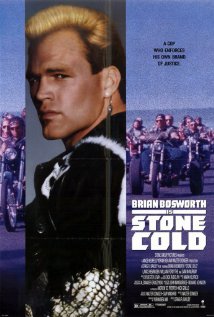
Since retiring Bosworth has made 15 movies, most of them low-budget action films where his character is basically just some form of himself, usually seated atop a motorcycle or out for vengeance.

Bosworth’s best films are probably Stone Cold and One Man’s Justice.

Michael Jordan
Space_jam
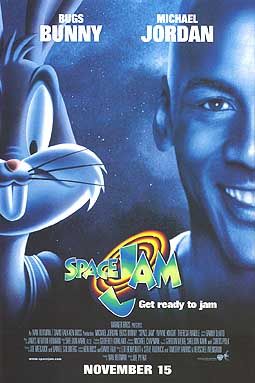
Jordan is probably the greatest basketball player ever, but there are a few things he’s not good at and acting is one of them (playing baseball is the other).

From a marketing perspective Space Jam was brilliant. It combined the most recognizable athlete in the world with the most beloved cartoon characters of all time. Commercially the film was a success grossing over $230 million worldwide, but for basketball fans so used to seeing Jordan do whatever he wanted on the court, watching him awkwardly struggle through the film was just strange.

Hulk Hogan
Santa_With_Muscles
Professionally wrestling is sports entertainment, not necessarily a real sport, but wrestlers are certainly athletic and their high-flying routines are something no athlete from any other sport could duplicate. Showmanship is a definite part of wrestling so it’s not surprising that so many wrestlers make movies.

In the 1980’s no wrestler was bigger than Hulk Hogan. Hulkamania ran wild in the ring and worldwide through a massive marketing campaign. This level of popularity naturally led to movies, however, Hulkamania did not run wild at the box office.

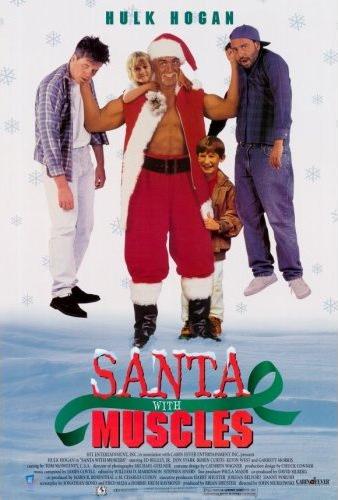
After a promising start to his acting career in 1983’s Rocky III, Hogan’s acting career never really took off. He starred in a string of low-budget action films such as the Thunder in Paradise series and Suburban Commando, as well as children’s films such as Santa With Muscles and Mr. Nanny.

It has recently been rumored that Hogan will star in the fourth installment of his old buddy Sylvester Stallone’s action franchise The Expendables.

Dennis Rodman
220px-Double_team_ver1
Rodman played 14 seasons in the NBA and was known for ferocious defense, great rebounding, rainbow-colored hair styles and piercings. Nicknamed “The Worm” Rodman also dabbled in acting. His films Double Team and Simon Sez are some of the worst of the worst. They are poorly written, cheaply made, and the acting is atrocious.

In a curious bit of casting Rodman starred alongside Jean Claude Van Damme and Mickey Rourke in Double Team. The result was perhaps the worst acting in cinematic history with the accented Van Damme, the multiple bad plastic surgeries of Rourke, and the many piercings of Rodman making it almost impossible to understand the dialogue.

Shaquille O’Neal
shaqsteel
Over a 19 year NBA career Shaq averaged 23 points and 8 rebounds a game. Perhaps more importantly he was one of those players that changed the game. At 7’1” and 325 pounds he was not only bigger, but stronger than any other player on the floor. He was so dominant that teams employed special defensive (hack-a-shaq) strategies to defend him.

However he was not so dominant at the box office, starring in such commercial flops as Kazaam and Steel.

In 1996’s Kazaam Shaq played a 5,000 year old genie trapped in a boom box who is released to grant a small boy three wishes. The film grossed $19 million on a $20 million budget.

If possible 1997’s Steel was even worse. Shaq played John Henry Irons in the flop that grossed just $1.7 million on a $16 million budget.

From Field To Screen: Athletes Who Successfully Turned To Acting

By Michael LeCompte

Athletes are naturally prone to spontaneous bits of acting. Watch any NFL lineman after being whistled for an offsides penalty, or an NBA player “flop” to try to draw a foul and it’s apparent that acting and athletics go together.

Athletes are often given memorable cameos in movies, such as Brett Favre in There’s Something About Mary or Lance Armstrong in Dodgeball and the new Entourage movie coming out this summer reportedly has over 20 athlete cameos. However, athletes have also been known, for better or worse, to parlay their popularity into leading roles.

Last week it was announced that Marshawn Lynch had made a movie (and that he was subsequently blocking its release because he’s not happy with the way the finished product looks). So, while we await Family First: The Marshawn Lynch Story, here’s a look at some athletes who managed to smoothly transition from field to screen, in some cases finding far greater success as actors than they ever did as athletes. In the next post we’ll look at athletes who have turned in the worst performances as actors.

Mark Harmon
Harmon,%20Mark%20act1
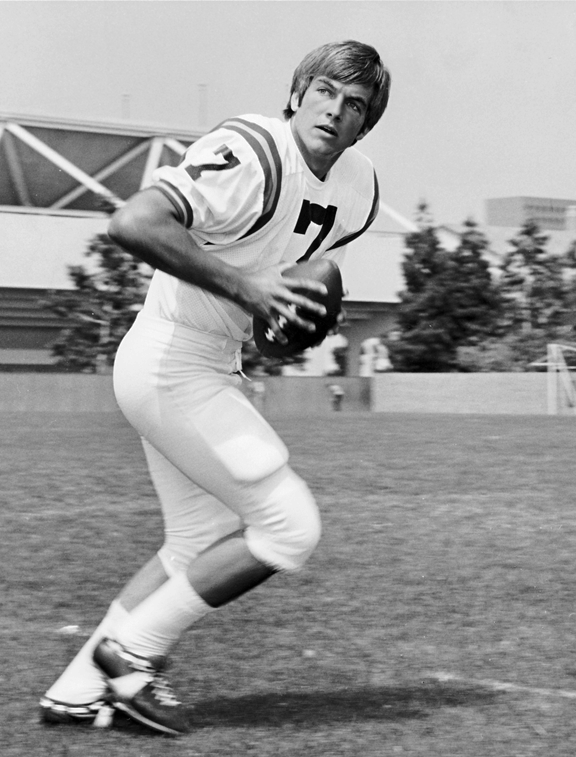
He’s been Agent Leroy Jethro Gibbs on TV’s NCIS since 2003, but long before that Mark Harmon was a two-year starter at quarterback for UCLA. Over the 1972 and 1973 seasons he led UCLA to a 17-5 record. At the time UCLA ran the run-heavy wishbone offense and Harmon’s stats reflect that. For his football career he went 43/100 for 845 yards with 9 touchdowns and 9 interceptions.

His big acting break came with a role on the hit show St. Elsewhere in 1983. Several small movies followed over the years, as did a stint on Chicago Hope from 1996-2000, before Harmon landed his signature role as Agent Gibbs.

Johnny Weissmuller (1904-1984)
84900-004-15E957DF
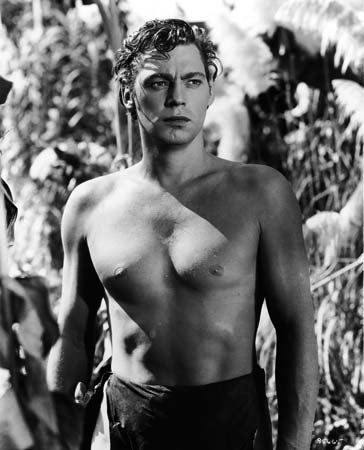
At the age of 9 Weissmuller was diagnosed with polio and was taught to swim as part of his treatment. From the YMCA swim team in Chicago he compiled an undefeated amateur record and went on to compete in the 1924 and 1928 Olympics, where he won a total of 5 gold medals as a swimmer, as well as a bronze in water polo.

Throughout the 1930’s and 1940’s he played Tarzan in 12 films, earning a then astounding $2 million dollars over the life of his contract.

Jim Brown
Jim_Brown
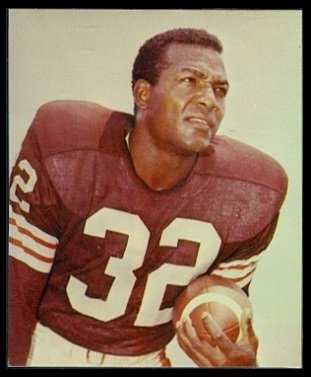
Jim Brown played for the Cleveland Browns from 1957-1965 and is widely considered one of the best players in NFL history. (His career average of 5.2 yards per carry is still the best ever by far).

Brown’s acting career is of note because it has endured. He didn’t play a down of football past the age of 29 and since retiring has appeared in over 20 films. Among his most notable performances are 1966’s The Dirty Dozen and 1969’s 100 Rifles, where he starred alongside Burt Reynolds and which was somewhat controversial at the time for having one of American cinema’s first interracial love scenes between Brown and Raquel Welch.

Chuck Connors (1921-1992)
Chuck%20Connors
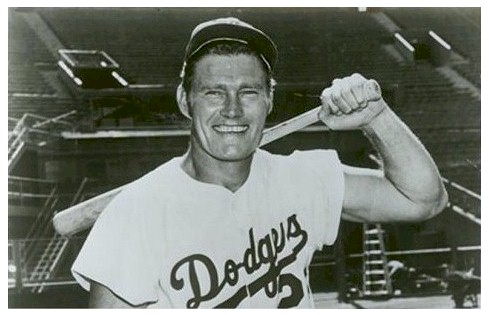
Over a 40 year acting career Connors was best known for The Rifleman (1958-1963) in which he played a widowed rancher with a trusty rifle, trying to raise his son in the Old West. However, before TV stardom the 6’5″ 190 pound left-hander played both professional baseball and basketball.

From 1946-1948 he played for the Boston Celtics, then in 1949 he got one game at first base with the Dodgers. In 1951 Connors played 66 games for the Chicago Cubs, batting .238 and hitting 2 home runs.

Carl Weathers
Apollo_Creed
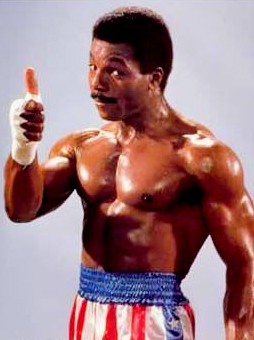
We all know him as his iconic character Apollo Creed from the Rocky movies, but before he was Rocky’s enemy/trainer/friend, Carl Weathers was a professional football player.

A linebacker out of San Diego State, Weathers played 8 games for the Oakland Raiders in 1970-1971. He then appeared in 18 more games for the B.C. Lions of the Canadian Football League before earning a degree in drama from San Francisco State University in 1974.

In addition to playing Apollo Creed in four Rocky films, Weathers has had memorable roles in such films as Predator and Happy Gilmore.